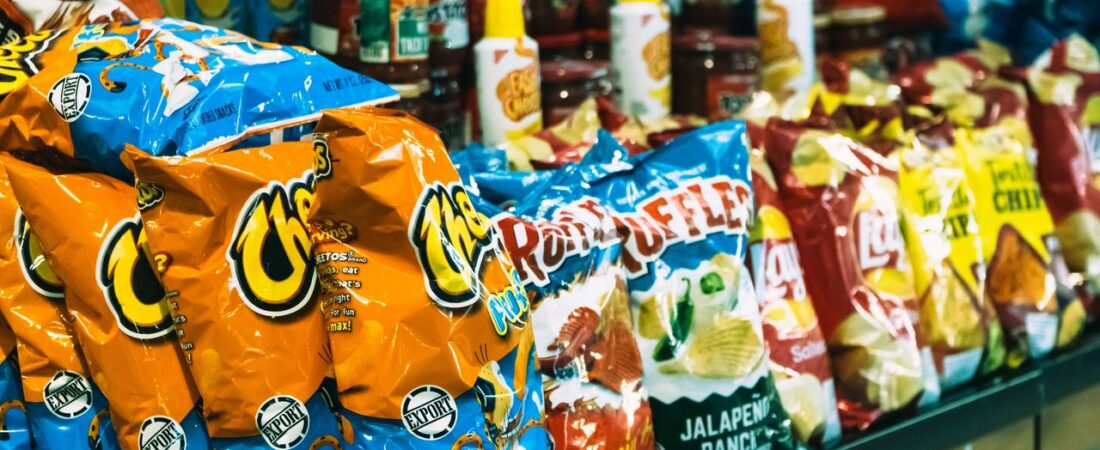
Packaged foods remain a central part of the U.S. diet, and federal agencies are increasingly reexamining the additives used to preserve shelf life, texture and flavor. One of the ingredients now drawing renewed scrutiny is butylated hydroxyanisole, or BHA, a preservative still present in some snack foods, cereals, frozen meals and processed meats.
FDA reopened the BHA safety review after decades of use in food
The U.S. Food and Drug Administration announced on February 10, 2026, that it would reassess the safety of BHA under its current conditions of use in food and in food-contact materials, according to the agency and reporting by the Associated Press. The federal action did not ban the ingredient, but it formally reopened a safety review of a compound that has been permitted in the U.S. food supply for decades. FDA records cited by the agency show BHA was first listed as generally recognized as safe in 1958 and later approved as a food additive in 1961.
BHA is used as an antioxidant preservative, meaning it helps prevent fats and oils from going rancid and can extend product shelf life. The FDA said package-label data indicate its use has declined in recent years, but the preservative remains in a range of foods, including some marketed to children. Public health groups have pushed for a reassessment for years, pointing to animal studies and long-running toxicology concerns.
Those concerns are not new. Since 1991, the National Toxicology Program has listed BHA as “reasonably anticipated to be a human carcinogen,” a classification repeatedly cited in federal and press accounts. The World Health Organization’s International Agency for Research on Cancer has also classified BHA as possibly carcinogenic to humans, a designation that reflects limited evidence in humans and stronger concern from experimental evidence rather than a finding that ordinary consumer exposure definitely causes cancer.
The current FDA review is part of a broader post-market reassessment of chemicals already in the food supply. In May 2026, the agency also announced new reassessment steps for other additives, including BHT and azodicarbonamide, signaling a wider federal effort to revisit older approvals using newer scientific methods and exposure data.
The U.S. impact is confirmed, but a full product-by-product list is not public
What is confirmed nationally is the regulatory action itself: the FDA has requested updated information on current uses and safety data for BHA in food. What is not yet public in one comprehensive place is a complete, official nationwide list of every packaged food that currently contains the additive. Federal officials and outside researchers have instead described categories where BHA is still found, including potato chips, cereals, processed meat products, frozen meals, cookies and other oil-containing packaged snacks.
That matters for consumers because BHA is not a niche industrial chemical with no retail presence. Reporting on the FDA action noted that the preservative remains in products sold through mainstream grocery channels, even if its use has fallen from earlier decades. The ingredient may also appear in some food-contact applications, which broadens the regulatory review beyond a single shelf category.
State action has also begun to diverge from federal timing. According to advocacy and trade reporting cited during the 2026 review, West Virginia passed a 2025 law that will ban BHA from foods sold in the state beginning in 2028. That state-level action does not by itself establish a federal health conclusion, but it shows how additives can face different legal treatment across U.S. markets while federal review is still underway.
For now, no federal recall has been announced, and the FDA has not stated that consumers should discard products that contain BHA. The practical effect is narrower: a reopened scientific and regulatory review, continued industry monitoring, and the likelihood that ingredient disclosure on labels will remain the primary way shoppers identify whether a specific packaged food contains the preservative.
Scientists are focusing on cumulative exposure, additive mixtures and older approvals
The reason BHA keeps returning to the public-health conversation is that the science and policy questions do not stop with one ingredient. Researchers studying ultra-processed foods have increasingly examined whether some additives, preservatives and packaging-related chemicals contribute to cancer risk directly, indirectly through inflammation and oxidative stress, or as part of broader dietary patterns. Reviews published in 2025 and 2026 have highlighted emulsifiers, nitrites, nitrates, titanium dioxide and some preservatives as chemicals of continued interest, while also stressing that evidence quality differs sharply by ingredient.
A January 7, 2026 study in The BMJ added to that broader discussion by examining preservative additives in the NutriNet-Santé cohort. The researchers reported that several preservatives, including some nitrites, nitrates, sorbates and sulfites, were associated with higher cancer incidence in parts of their analysis, although they did not find a link for all preservatives as a group. That distinction is important because it suggests the current scientific debate is increasingly about specific additives and exposure patterns, not a single uniform category called “packaged food.”
For regulators, that creates a difficult task. Many of these additives were cleared decades ago, often before current methods for exposure modeling, mixture effects and long-latency disease tracking were available. The FDA’s current post-market review framework reflects that problem by revisiting chemicals already on the market rather than focusing only on new approvals.
For shoppers, the immediate takeaway is factual rather than predictive. BHA remains legal at the federal level while the FDA review proceeds, its use appears lower than in past years but not eliminated, and the current debate reflects an expanding body of research on how specific food additives may affect long-term health, especially when exposure is repeated across many packaged foods over time.