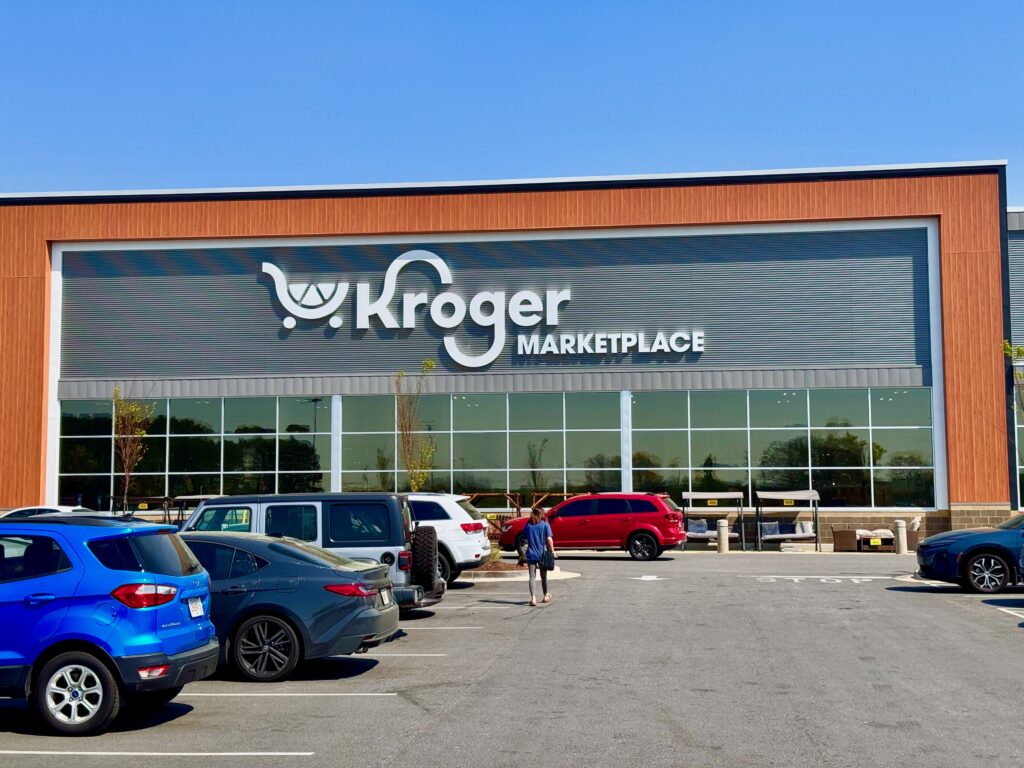
The supermarket industry is still sorting through the fallout from the failed Kroger-Albertsons tie-up that would have reshaped grocery competition nationwide. Now Kroger is moving from merger recovery to store-by-store retrenchment, saying dozens of locations will close as it redirects money toward stronger markets, lower prices and new stores.
Kroger says about 60 stores will close over the next 18 months
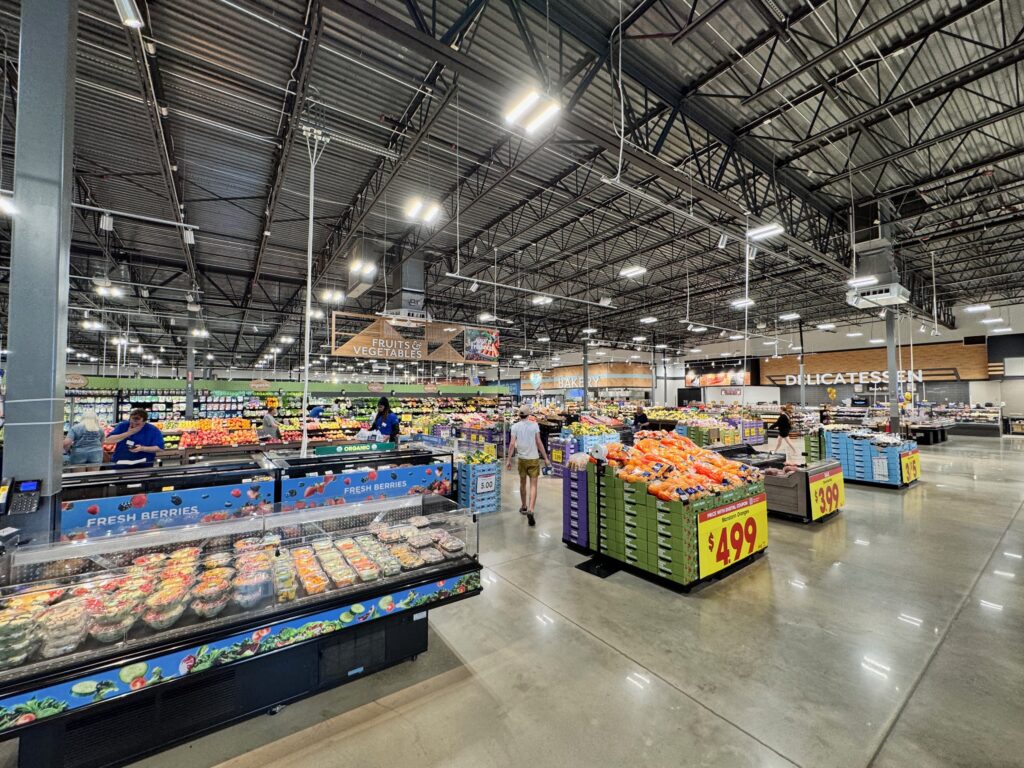
Kroger said on June 18 that it plans to close around 60 stores across the United States over the next 18 months, according to the company’s first-quarter 2026 earnings announcement and comments reported by the Associated Press. AP reported that interim Chairman and CEO Ronald Sargent said Kroger had deferred store closings during its two-year effort to merge with Albertsons, and is now moving ahead with that review.
The scale is notable even for the nation’s largest supermarket operator. AP reported that Kroger operates 2,731 stores in 35 states and the District of Columbia, and that employees at affected stores will be offered jobs at other locations. Kroger’s first-quarter results also showed a $100 million pre-tax adjustment tied to store closures in the prior-year comparison, a sign that store rationalization has become a material financial line item in the company’s reporting.
Kroger has not published a comprehensive public closure list. What the company has confirmed is the timing, the approximate number of stores, and its intention to shift sales from closed locations to nearby stores where possible, according to AP’s account of the June earnings call.
What is confirmed so far in affected states
So far, the clearest local confirmations have come one store at a time, not through a national map. In North Carolina, WBTV reported that Harris Teeter confirmed its Albemarle store on North First Street would close by June 11, 2026, after what a spokesperson called a strategic review of the site’s long-term business viability.
WBTV reported that about 60 workers were employed at that Albemarle store and were offered chances to transfer to other locations. The station also reported that the Albemarle decision followed another Harris Teeter closure in east Charlotte, showing that the impact is already reaching communities through Kroger-owned banners outside the core Kroger name.
What remains unknown is how many stores in each state will ultimately close. Kroger has not released a full list of affected locations in North Carolina, California, Texas, Colorado, Georgia or other states where reports have pointed to possible closures, so residents are still relying on individual company notices and local reporting rather than a single national disclosure.
The closures follow a merger defeat and broader cost pressure

The backdrop is the collapse of Kroger’s proposed Albertsons acquisition. The $24.6 billion merger plan, first announced in 2022, fell apart in December 2024 after judges blocked the deal over competition concerns, according to AP, Reuters and court-related reporting published after the rulings. Albertsons formally terminated the merger agreement on December 11, 2024.
That failed deal did not create Kroger’s operating pressures on its own, but it clearly changed the timing of store decisions. AP reported that Sargent said Kroger normally reviews store performance annually, but deferred closures during the merger process. Once the transaction was dead, those delayed decisions began to move forward.
Kroger’s own June 18 earnings release also points to broader cost pressures shaping the company’s strategy. The company said gross margin was pressured by higher transportation costs and planned price investments, while its operating expense rate rose in part because of planned investments in associate wages and hours. In the same release, Kroger said it still expects to open at least 30 stores this year and accelerate openings in high-growth geographies.
What shoppers should expect next

For customers, the immediate effect will likely be uneven and highly local. Some communities will see a nearby store disappear, while others may see little visible change if Kroger succeeds in shifting demand to another store under the same banner family. Kroger has said workers at impacted stores will be offered roles elsewhere, but that does not answer every question about convenience, pharmacy continuity or neighborhood access.
Shoppers should also expect the company to keep balancing closures with expansion. AP reported that Kroger sees the closures as a way to improve profitability by moving sales to other stores, while the company’s earnings release said it remains committed to planned price investments and new-store growth in stronger markets.
The practical takeaway is that Kroger is not exiting grocery retail broadly. It is shrinking selectively after a failed merger, while continuing to invest in price, labor and expansion where management believes demand is stronger, according to the company’s June 18 statement and subsequent reporting.