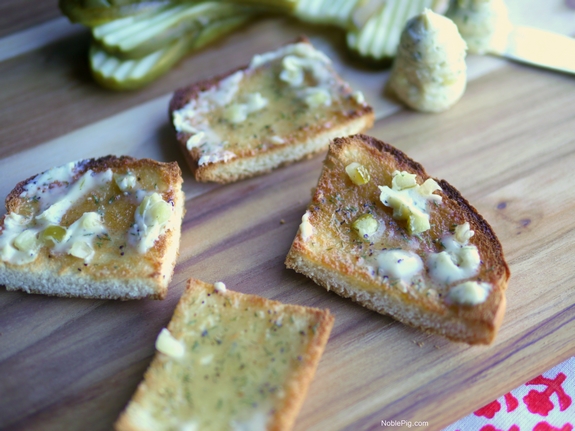
Pickle flavor has continued moving beyond the jar in 2026, with brands rolling out dill pickle cheese, dips, chips and other limited-time products as food companies chase a flavor that industry and brand data suggest still has broad appeal. In that crowded field, one of the more specific launches came on May 28, when Grillo’s Pickles and PopUp Bagels debuted a first-ever hot pickle butter at PopUp Bagels shops for a two-week run.
The launch put a niche condiment in the middle of a bigger pickle-flavor push
Grillo’s Pickles and PopUp Bagels said in a May 2026 announcement that their hot pickle butter would be available at all PopUp Bagels locations from May 28 through June 10, making the spread both limited in duration and clearly tied to the companies’ existing pickle-and-bagel collaboration. The companies described the butter as built with Grillo’s Hot Chips, which include habanero and jalapeño along with the brand’s usual fresh pickle profile. That matters because this was not a generic dill spread or a standard compound butter; it was positioned as a spicy pickle butter made for immediate food-service use rather than a broad grocery rollout.
The product also landed in a market already crowded with pickle-adjacent launches. PepsiCo said this spring that Cheetos Flamin’ Hot Dill Pickle was returning permanently after becoming the fastest-selling limited-edition product in the brand’s history. The Laughing Cow introduced a dill pickle cheese wedge in March, and trade coverage this year has tracked new dill pickle dips, cheese spreads and snack extensions from multiple brands. Taken together, those launches show a measurable pattern: pickle is no longer a novelty confined to one product category.
For this taste test, the most useful way to judge the butter was not to ask whether pickle flavor works in theory, but where a butter-heavy, salty, acidic spread performs best on the plate. Over seven days, the strongest results came on foods that already benefit from fat, heat and crunch. Toasted bagels were the obvious fit, which aligns with the product’s original setting, but the butter also worked well melted over roasted potatoes and spread lightly on grilled corn. In those cases, the butter’s dairy richness softened the pickle sharpness while the brine added contrast.
The weaker pairings were foods that either fought the acidity or duplicated it. Scrambled eggs turned muddy rather than brighter, and plain pasta absorbed the butter without giving the pickle flavor enough texture to hang onto. A turkey sandwich was acceptable but not especially better than using sliced pickles and regular butter separately. The product’s strongest uses were the simplest ones: hot starches, toasted bread and vegetables with char.
What the weeklong test showed once the butter moved beyond the bagel shop
Because the butter was released through PopUp Bagels rather than supermarkets, the biggest practical limitation was access. The companies announced the product for PopUp Bagels locations, but they did not describe a national retail list, a grocery distribution plan or a shelf-stable version. That means anyone outside the chain’s footprint was largely dealing with secondhand buzz rather than a product they could pick up in a standard dairy case. The launch created a lot of interest precisely because it was narrow.
That limited footprint also shaped how the butter should be understood. In a bagel shop, a pickle butter is a direct topping, and customers can taste it in the setting it was designed for. At home, the same spread becomes an experiment ingredient, and not every experiment pays off. Used sparingly on a warm everything bagel, the butter tasted balanced because the onion, garlic and sesame notes gave the pickle flavor something to sit against. On a plain cracker, by contrast, the result leaned salty and flat.
The home test also made clear that texture matters as much as flavor. Foods with crisp edges or rough surfaces, including smashed potatoes, toast points and grilled vegetables, gave the butter room to collect and melt unevenly in a good way. That created pockets of heat and brine instead of one uniform bite. Soft foods such as white rice or plain noodles turned the butter into more of a coating, which made the pickle note feel one-dimensional.
What is not yet known is whether hot pickle butter has staying power outside a limited-time collaboration. The companies announced a two-week run ending June 10, and neither company said in that release that the butter would become a permanent menu item. In practical terms, that leaves the product closer to a test or promotional menu event than a confirmed long-term expansion. For customers, the clearest takeaway is that the concept works best when it stays close to its original use case: warm bread, savory snacks and simple sides rather than every possible meal.
The product makes sense because brands are chasing pickle demand, but it still has limits
The reason a pickle butter exists at all is broader than one bagel chain. Food brands have been using pickle flavor as a growth lever across snack, dairy and condiment categories, and companies are increasingly explicit about the demand signals behind those decisions. The Laughing Cow said in its March 2026 launch materials that Mintel data showed 65% of U.S. adults who snack either have experience with or interest in pickle-flavored options. Even allowing for the marketing language that often surrounds product launches, that figure helps explain why brands keep extending pickle into new formats.
There is also a business logic to making the flavor more premium or more specialized. A plain pickle chip is now common. A hot pickle butter, by contrast, lets two brands combine audiences and create urgency with a short release window. That is a familiar strategy in packaged food and quick-service menus: use a limited product to generate attention, test demand and reinforce brand identity without committing to permanent distribution. In this case, Grillo’s brought the refrigerated pickle credibility and PopUp Bagels brought a menu format where flavored butter is easy to trial.
Still, the weeklong test suggests that novelty and usefulness are not the same thing. The butter succeeded when it replaced an existing buttery, salty topping and failed when it tried to become an all-purpose condiment. That distinction matters because compound butters perform differently from sauces, spreads and pickle slices. Butter carries flavor well on hot foods, but it can turn heavy on foods that need brightness from a sharper or crunchier ingredient.
For customers, the practical expectation should be modest and specific. If a pickle butter like this shows up again, it is best treated as a finishing spread for toasted bagels, potatoes, corn or other hot, savory foods with texture. The product made clear why pickle remains a useful flavor platform in 2026, but it also showed that even a well-timed limited release has a narrow lane. The strongest result was not that pickle butter belongs on everything. It was that, on the right foods, it does exactly enough.