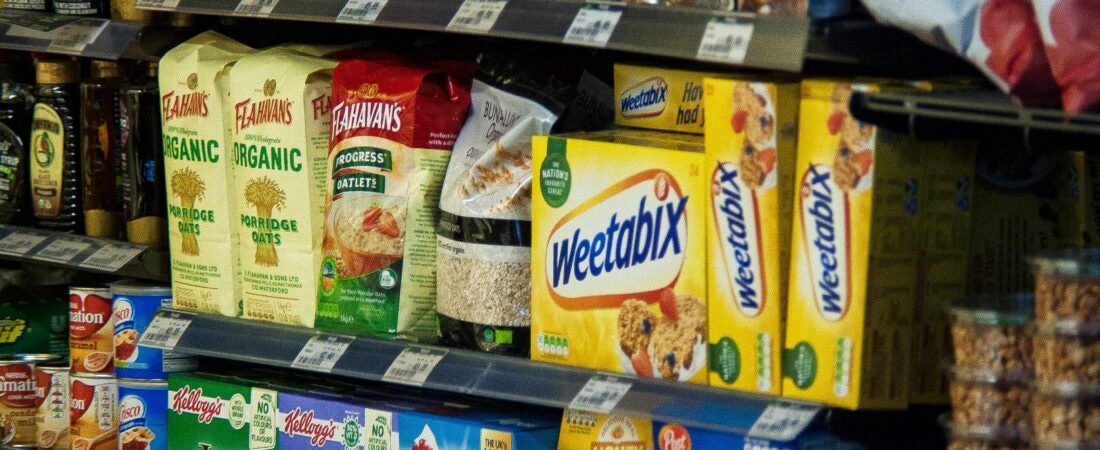
Food prices remain a pressure point across the U.S., and supermarkets are leaning hard on layout, pricing tools, and loyalty programs to protect margins while keeping shoppers in the store. That makes everyday grocery shopping a useful place to look at the small, verified tactics retailers use to shape what ends up in the cart.
1. The “deal” display is not always the cheapest option
Endcaps and bumpout displays are among the most visible selling tools in a grocery store, and recent consumer reporting has put fresh attention on them. Consumer Reports, cited in a June 19, 2026 Tasting Table report, said these displays can push shoppers to spend more because the prominent placement suggests value even when the item is not the lowest-priced choice available.
That tactic works at scale because the display itself does part of the marketing. A product stacked at the aisle entrance or jutting into the walkway looks important before a shopper even checks the shelf tag. Retailers and brands have used that traffic pattern for years because it captures attention from people who did not come in planning to buy that item.
What is not always obvious is that the regular aisle may hold a lower unit price, a larger size, or a store-brand alternative with better value. The practical takeaway for shoppers is simple: a big sign and a front-of-aisle stack can signal promotion, but not necessarily savings, and recent consumer coverage has said the comparison point still matters.
2. Eye-level shelves are premium real estate
The products placed directly in a shopper’s natural line of sight often are not there by accident. Consumer guidance and retail reporting have long noted that eye-level shelves are prime space for national brands and higher-margin items, while cheaper or generic versions are often placed lower or higher where shoppers are less likely to pause.
That matters because grocery shopping is usually fast and repetitive. If someone reaches first for what is easiest to see, the store does not need a dramatic price difference to change the outcome. A few seconds of convenience can turn into a more expensive basket, especially in cereal, snacks, sauces, and frozen foods where several near-identical options sit side by side.
The local impact is broad because this is not tied to one chain or one state. It is a standard merchandising practice across U.S. supermarkets. For customers, the practical effect is that the best value may be one shelf up or down, and that is often where store brands and larger economy sizes are waiting.
3. Unit pricing is there to help, but many shoppers still miss it
One of the most useful numbers on a grocery shelf is also one of the easiest to ignore: the unit price. The National Institute of Standards and Technology said in a December 2024 update that unit pricing is not federally mandated and varies state by state, with 33 states and three territories having no unit-pricing law or regulation in force, while other states use voluntary or adopted model rules.
NIST has also promoted best-practice label design because the layout of price information changes whether shoppers notice it. Academic eye-tracking research published in the Journal of Business Research found that how the unit price is displayed affects visual attention and product choice, reinforcing the point that visibility matters, not just the number itself.
For shoppers, this is one of the clearest grocery-store blind spots. A sale sticker can look compelling, but the cost per ounce, pound, or sheet often tells the real story. The catch is that labels are not uniform nationwide, so the information may be harder to spot depending on where you shop and which chain set the shelf tag.
4. Staples are often placed deep in the store for a reason
Milk, eggs, bread, and other routine staples are frequently placed toward the back or outer edges of the store, a layout decision that consumer reporters continue to flag because it increases the number of products shoppers pass along the way. Tasting Table’s June 2026 summary of Consumer Reports guidance pointed to this tactic directly, noting that staple placement helps expose shoppers to more goods before they reach the items they came for.
The logic is straightforward. If high-frequency items sat next to the entrance, a shopper on a quick trip could get in and out with minimal browsing. By moving those essentials deeper into the floor plan, stores create more opportunities for impulse purchases in center aisles, seasonal displays, and promotional islands.
This is another practice with national reach rather than one confirmed state list. Stores do not publish formal maps explaining the strategy, but the customer impact is visible in day-to-day shopping: quick trips become longer trips, and longer trips create more chances to add unplanned items before checkout.
5. Checkout lanes are designed for impulse buys
Checkout is not just a waiting area. It is one of the most intentionally merchandised parts of the store, built around low-cost, quick-grab items that can be added with almost no deliberation. Research published in Appetite found that targeted checkout placement can shift buying behavior, underscoring how the last few feet of a shopping trip remain valuable selling space.
The products most often placed there share a pattern: candy, gum, single-serve drinks, snacks, and seasonal items that do not require comparison shopping. The price is usually low enough that the customer does not need to rethink the full basket. That is why checkout merchandising remains attractive even as some stores add self-checkout or mobile-scan options.
For shoppers, the implication is practical rather than abstract. The store has already captured the main trip, and the lane is used to capture one more decision. Those add-ons may be small individually, but they are among the most repeatable ways a grocery bill grows over time.
6. Loyalty pricing can make the shelf look cheaper than it is
Digital coupons and member-only pricing have become a standard supermarket feature, and they can make shelf prices look lower than the amount many customers will actually pay. Consumer Reports noted in its supermarket savings guidance that sale-tag errors and discount complexity remain real issues, including investigations into cases where advertised discounts did not match the register price.
The underlying trick is not always deception in a legal sense; often it is fragmentation. One price may apply only to loyalty members, another only if a digital coupon is clipped in the app, and another only if a shopper buys multiple units. In a busy aisle, those conditions can be easy to miss, especially when the largest number on the tag is the promotional one.
For customers, that means the shelf sign may describe several different prices at once. The broad U.S. impact is clear because major chains now rely heavily on app-based offers. If the terms are not read carefully, the lower number can shape the buying decision even when it is not the price that rings up.
7. Digital shelf labels are spreading faster than many shoppers realize
Electronic shelf labels are becoming more common in U.S. grocery aisles. The Associated Press reported in June 2025 that Walmart hoped to have digital price labels in 2,300 U.S. stores by 2026, and Kroger said its digital labels were not tied to facial-recognition technology after lawmakers questioned whether the systems could support dynamic pricing.
What is confirmed, based on the study covered by AP, is that researchers found virtually no surge pricing before or after one chain adopted electronic labels. What is not confirmed is a broad, nationwide pattern of personalized in-store grocery pricing tied to individual shoppers. That distinction matters because the technology can change prices quickly without proving that stores are changing them unfairly.
For customers, the practical change is visibility and speed. A price can be updated centrally instead of by hand. That can help with markdowns and waste reduction, but it also means shoppers may encounter a retail environment where promotions, corrections, and discounts move more fluidly than paper-tag aisles did.
8. Sensory cues can affect how long people stay and spend
Grocery stores do not rely only on price and placement. Research on store environment has found that music, scent, lighting, and other sensory cues can influence shopper mood and behavior. A widely cited retail study discussed by Grocery Dive found that consumers tend to stay longer and feel more positive in stores that use stronger sensory design.
Academic research backs parts of that pattern. Supermarket scent studies published in peer-reviewed journals have found measurable effects tied to ambient smell and shopper evaluations. The point is not that every bakery aroma is artificially pumped through the vents, but that retail environments are carefully managed and those details can change how relaxed, hungry, or receptive a shopper feels.
That has a customer-facing consequence even when the tactic is subtle. A slower, more pleasant trip can become a larger basket. In food retail, atmosphere is not just decoration; it is part of how stores shape pace, attention, and buying decisions across the visit.
9. Shrinkflation and package design can hide the real price jump
Not every grocery trick happens on the shelf map. Sometimes it is inside the package. NIST has promoted unit pricing as a tool to help consumers fight shrinkflation, the practice of reducing package size while keeping the shelf price the same or close to the same. That makes the change easy to miss if a shopper is focused only on the sticker price.
This matters most in categories where packaging changes are subtle: snack bags, cereal boxes, paper goods, yogurt packs, and frozen meals. A box can look nearly identical while holding fewer ounces, fewer sheets, or fewer pieces. If the front panel keeps familiar branding and shape, a price that appears flat can still represent a meaningful increase in cost.
For shoppers, the factual takeaway is that the “same price” message can be incomplete. The better measure is the cost per unit and the net contents on the label. In an era of persistent grocery inflation, that is often where the biggest unnoticed change shows up first.