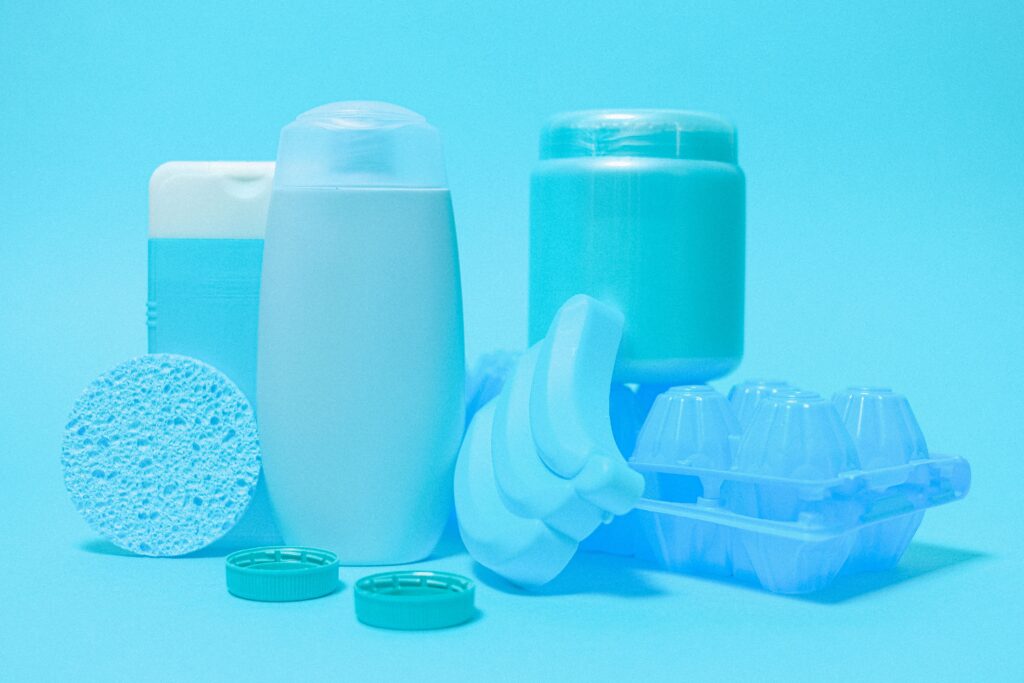
Microplastics research has moved from oceans and bottled drinks into ordinary American kitchens, where studies and consumer guidance now point to food prep, storage, and heating habits as everyday exposure points. The focus is not one national recall or one brand-specific warning, but seven common kitchen items that recent research and consumer reporting have repeatedly identified as potential contributors.
Plastic storage containers and microwave reheating

Consumer Reports said in its February 2024 guidance that reducing contact between food and plastic is a practical step for households trying to limit exposure, especially when heat is involved. The outlet advised against heating food in plastic and pointed readers toward glass, stainless steel, and silicone alternatives where possible. That guidance followed its broader reporting on plastic chemicals and food-contact materials.
Peer-reviewed research published in Environmental Science & Technology in June 2023 found that plastic containers and reusable food pouches can release both microplastics and nanoplastics under different use conditions. A University of Nebraska-Lincoln team reported that microwaving certain plastic baby food containers and reusable pouches produced especially high particle counts during testing.
Nebraska Today, summarizing that work, said some microwaved containers released more than 2 billion nanoplastics and 4 million microplastics per square centimeter. The research centered on infant feeding products, not every household leftover tub sold in the U.S., and it did not establish a universal number for all plastics. What is confirmed is that heat and repeated use can increase breakdown, which is why consumer guidance has increasingly shifted toward moving food into glass or ceramic before reheating.
Worn utensils, scratched pans, and scarred cutting boards

Black plastic kitchen utensils drew separate scrutiny in 2024 after Toxic-Free Future reported finding flame-retardant chemicals in black plastic household products, including some food-contact items and kitchen tools. That testing focused on chemical contamination rather than microplastic shedding alone, but it added to concerns about older or heat-damaged plastic utensils used around hot food.
Research on cookware has also narrowed in on damaged surfaces. A 2022 study in Science of the Total Environment reported that a broken nonstick coating could release about 2.3 million microplastics and nanoplastics, while even a surface crack could leave behind thousands of particles during simulated cooking conditions. Consumer Reports has separately advised consumers to retire damaged nonstick cookware and avoid abrasive wear.
Cutting boards are another overlooked source. A May 2023 Environmental Science & Technology study found that chopping on polyethylene and polypropylene boards can generate microplastics, with estimated annual exposure varying by board material and use. The study did not say wooden boards are risk-free or maintenance-free, but it did identify plastic cutting boards as a potentially significant food source when surfaces become deeply scarred.
Tea bags, bottled water, and other heated plastic contact
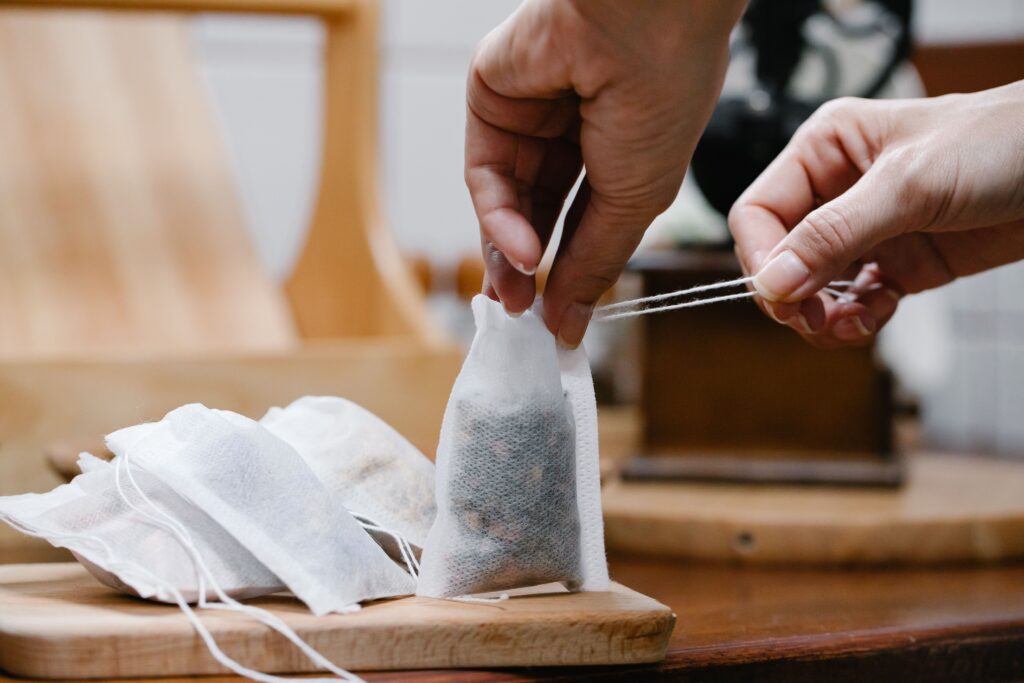
Tea drinkers have also been part of the research. McGill University said in September 2019 that a single plastic tea bag steeped at brewing temperature released about 11.6 billion microplastic particles and 3.1 billion nanoplastic particles into water in its study. That finding applied to plastic tea bags tested by the researchers, not every paper tea bag on the market.
Bottled water remains one of the most widely cited exposure sources. An NIH summary of a January 2024 Proceedings of the National Academy of Sciences study said researchers found an average of about 240,000 plastic particles in a liter of bottled water across three popular brands, with roughly 90% in the nanoplastic range. The brands were not named publicly in the study summary.
Neither result means tap water or all packaged drinks are particle-free. The confirmed takeaway from both studies is narrower: repeated contact between liquids and plastic, especially under heat or during processing, can add measurable plastic particles to what people consume. That has helped shift consumer advice toward loose-leaf tea, simpler paper tea bags, home filtration, and reusable glass or stainless steel bottles.
What this means in a typical U.S. kitchen

The practical impact for households is less about throwing out every plastic item at once and more about identifying the products most associated with heat, friction, or visible wear. Consumer Reports’ 2024 advice has been consistent on that point: avoid microwaving food in plastic, limit hot food contact with plastic where possible, and choose wood, stainless steel, silicone, ceramic, or glass for higher-heat tasks.
What is not yet known is the precise health effect of every level of microplastic exposure from each kitchen source. Researchers have documented the presence of microplastics and nanoplastics in food, bottled water, and parts of the human body, but public-health agencies and scientists are still working to define the long-term risk of specific exposure amounts.
For now, the clearest fact pattern is about exposure pathways, not a single emergency event. Recent studies and consumer guidance identify seven familiar categories as the main kitchen watch list: plastic storage containers, microwaving in plastic, black plastic utensils, peeling nonstick pans, plastic cutting boards, plastic tea bags or pods, and bottled water. The science is still developing, but the household sources are increasingly well documented.