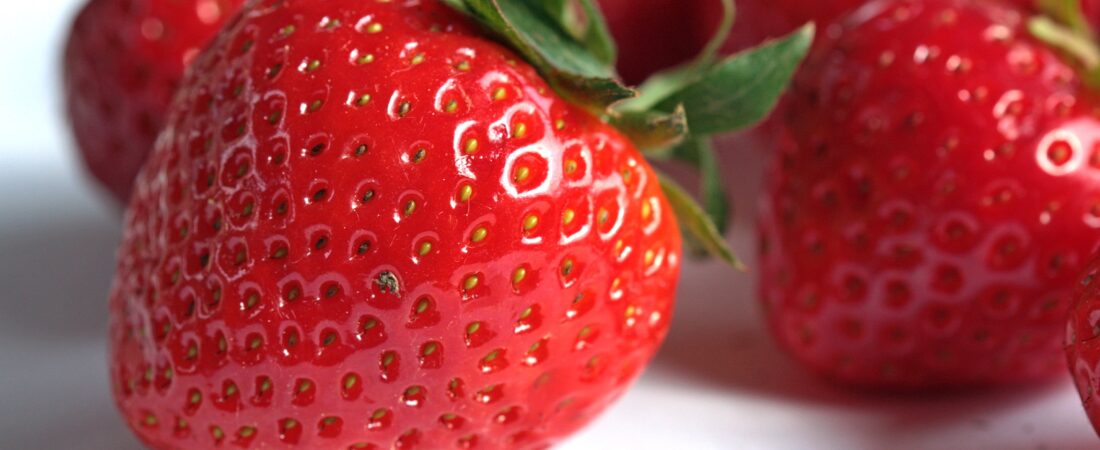
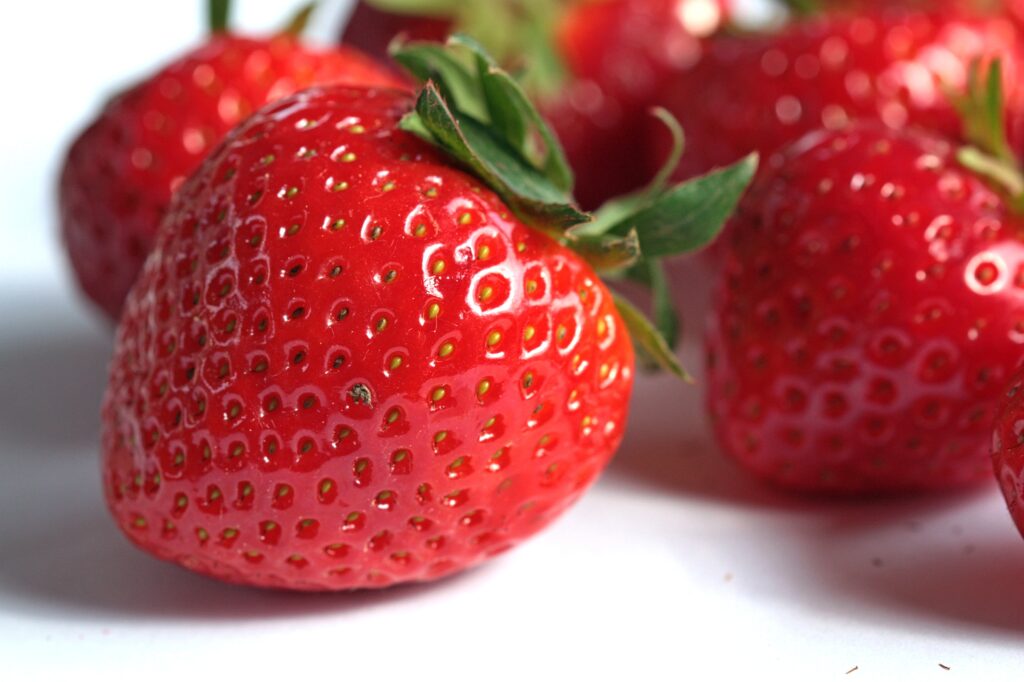
Luxury fruit has long been part of Japan’s food culture, but in the U.S., individually packaged premium berries only recently broke into the mainstream conversation. That shift came into sharp focus in Los Angeles, where Erewhon’s single Elly Amai strawberry became a viral grocery-store item in March 2025.
Erewhon turned one imported berry into a widely watched food event
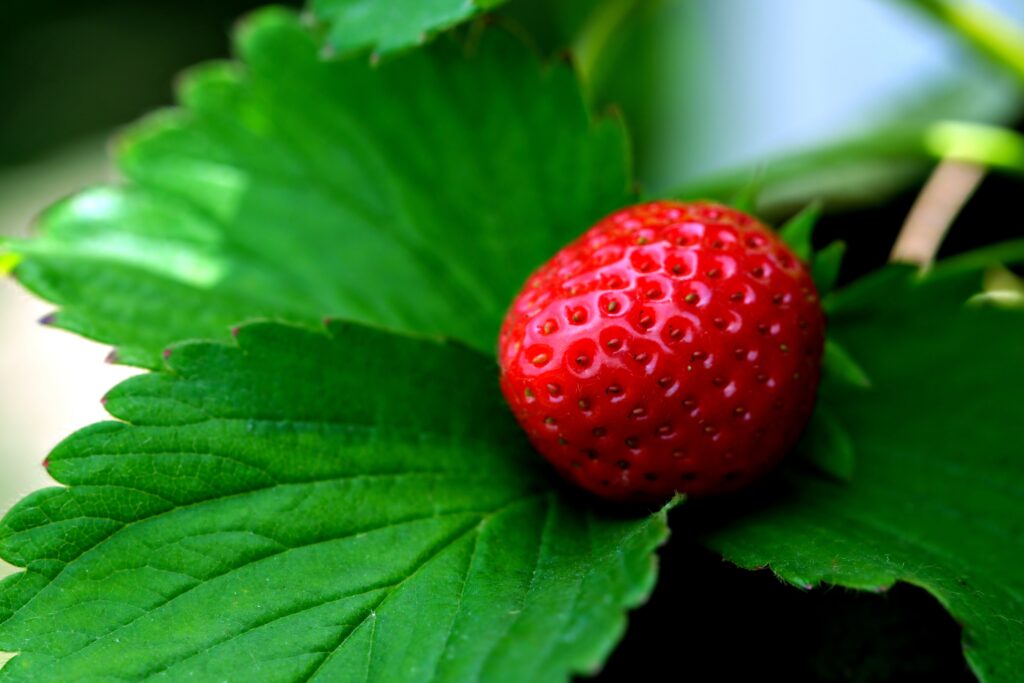
The specific product was a single Japanese strawberry imported by luxury supplier Elly Amai and sold at Erewhon, the upscale California grocery chain, for $20 each at the Pasadena store, according to The Washington Post’s March 4, 2025 taste test. The Post reported that the berry had first been advertised at $19 before the store price it observed was corrected to $20. That price point, attached to one individually packaged strawberry, helped push the item from novelty to national food news.
The Post also reported that the berry was selling out in Los Angeles after a viral social video from Alyssa Antoci, a relative of the family behind Erewhon, praised it as the best strawberry she had tasted. In the Pasadena location, the paper said the strawberries were displayed in a dedicated refrigerated case rather than mixed into a standard produce section. That merchandising mattered because the fruit was being sold as a luxury item, not as a routine grocery purchase.
This was not the first time premium Japanese-style strawberries had drawn attention in the U.S. Eater reported in 2019 that Oishii’s Omakase berry, grown in New Jersey using Japanese growing methods, appeared in top New York restaurants and sold in ways that emphasized rarity and flavor over volume. Eater later reported in 2022 that Oishii had cut prices significantly as it expanded production, showing that the luxury-berry market was already evolving before Erewhon’s imported version went viral.
The clearest local impact showed up in Los Angeles stores
The local impact was centered in Los Angeles County, where Erewhon shoppers encountered the fruit as a limited, high-visibility in-store item rather than a broad supermarket rollout. The Washington Post specifically described the Pasadena Erewhon, where the display held about two dozen strawberries during one visit. That gives a rare, concrete snapshot of scale, even if the chain did not publish a wider inventory count.
What remains unconfirmed is how many Southern California locations received the strawberries, how often stores were restocked, and how long the item stayed available chainwide. Erewhon had not publicly released a comprehensive list of affected stores or sales totals in the reporting available at the time. That means the strongest verified reporting stays tied to what journalists directly observed in Pasadena and to the broader Los Angeles buzz around the product.
Los Angeles was also a natural launch point because Erewhon already had a reputation for premium pricing and viral food products. Forbes reported in 2025 that the retailer’s shelves included imported Japanese strawberries priced at $19 each alongside celebrity smoothie launches that regularly drew online attention. In practical terms, the berry landed in a market already primed for luxury grocery theatrics, even if the actual store footprint remained limited.
The price reflects Japanese fruit culture, branding and controlled production
The context for the berry’s price starts with Japanese premium-fruit culture, where appearance, sweetness and gift value can command unusually high prices. The Japan Times reported years earlier that luxury strawberries in Japan could retail for about ¥500 apiece, while another report described high-end strawberry brands developed and marketed with the same care seen in premium melon categories. That broader market helps explain why a single berry can be sold as a specialty product rather than a commodity.
In the Erewhon case, the product details added another layer. The Washington Post reported that Elly Amai’s berries were a Tochiaika variety grown organically at Anhay farm in Tochigi Prefecture, a region known as Japan’s “Strawberry Kingdom.” The paper also said the berries averaged 16 to 19 on the Brix scale, compared with roughly 7 to 9 for many berries commonly sold in the U.S. market. Higher sweetness, fragile handling requirements and international shipping all fed into the luxury positioning.
There is also a clear business precedent for this category in the U.S. Eater reported that Oishii built demand around strawberries bred to replicate the flavor profile of prized Japanese fruit, first for chefs and then for broader retail customers. Over time, Oishii lowered prices as production scaled. That history suggests the premium price is tied not just to taste, but to scarcity, branding and the cost structure of highly controlled growing systems.
For customers, this stayed a novelty purchase, not a produce reset
For shoppers, the main takeaway was straightforward: this was a single-serve luxury experience, not a sign that ordinary strawberry prices were changing. The Washington Post described the Elly Amai berry as individually packaged in a protective container and marketed with handling instructions that emphasized its delicacy. Customers walking into an Erewhon were encountering a curated specialty item designed to stand apart from standard clamshell fruit.
The comparison point mattered, especially in California. The Post noted that Erewhon also carried Harry’s Berries from Oxnard at far lower per-pound pricing than the imported strawberry. That made the Japanese berry less of a substitute for local produce and more of a one-off purchase for curiosity, gifting or social-media appeal. For most shoppers, the item functioned as a premium add-on within a store already known for expensive wellness products.
The broader industry context suggests these berries may keep showing up in limited, attention-grabbing formats. Eater’s reporting on Oishii showed that luxury strawberries can move from chef obsession to wider retail, though not necessarily at mass-market prices. As of the March 4, 2025 reporting that defined the Erewhon moment, the single Elly Amai strawberry was best understood as a high-profile niche item with a verified foothold in Los Angeles grocery culture.